
.png)
Bhutan


Best Time to Visit Bhutan: April and October
Bhutan doesn't make things easy. The country measures success by Gross National Happiness rather than GDP, limits tourist numbers through daily fees, and maintains that monasteries clinging to cliffs are perfectly reasonable architecture. If you're wondering when to visit Bhutan, April and October bracket the country's two best seasons: spring brings rhododendrons blooming across the Himalayas, while autumn offers crystal-clear skies and the country's most important festivals. Both months deliver Bhutan when the weather cooperates and the kingdom reveals why it's worth the effort to get there.
April: Spring Bloom and Clear Skies
April in Bhutan means rhododendrons — the national flower — blooming across the hillsides in shades of red, pink, and white. The valleys are carpeted in wildflowers, the rice paddies are being prepared for planting, and the air has a clarity that makes the Himalayan peaks seem close enough to touch. Temperatures are comfortable for trekking: cool mornings, warm afternoons, and evenings cool enough that the wood stoves in lodges feel justified.
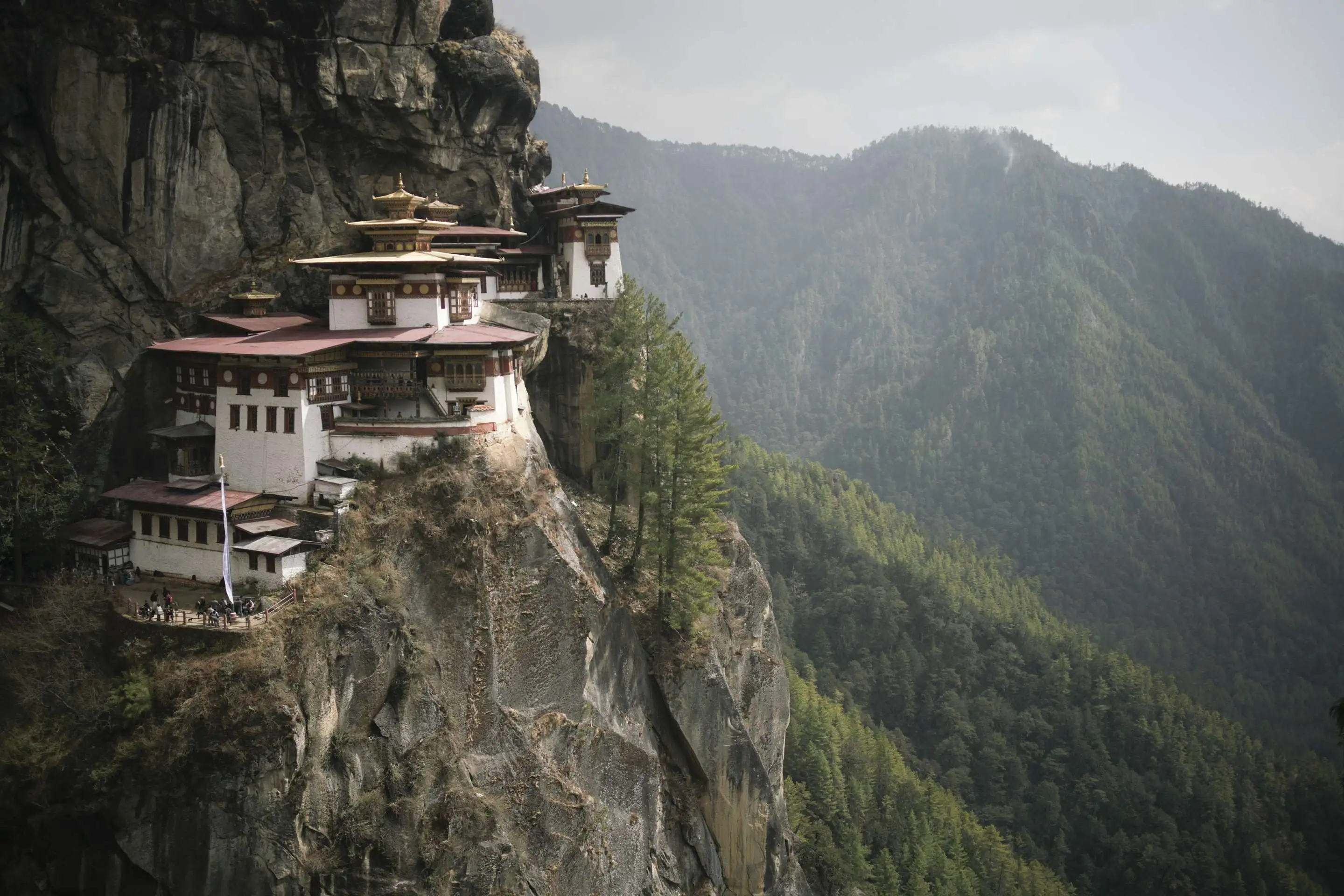
The Tiger's Nest Monastery (Paro Taktsang), Bhutan's most iconic site, is accessible and spectacular in April. The hike up takes a few hours through pine forests and past prayer flags, and the monastery itself — perched on a cliff 900 meters above the valley — offers views across Paro that justify every switchback. April's weather means the trail is dry and the visibility is excellent.
April also brings the Paro Tshechu, one of Bhutan's major religious festivals. The exact dates shift based on the lunar calendar, but it typically falls in March or April. The festival features masked dances performed by monks, the unfurling of a giant thangka (religious painting), and locals dressed in their finest ghos and kiras (traditional Bhutanese dress). It's Bhutan at its most vibrant and communal.
October: Autumn Clarity and Festival Season
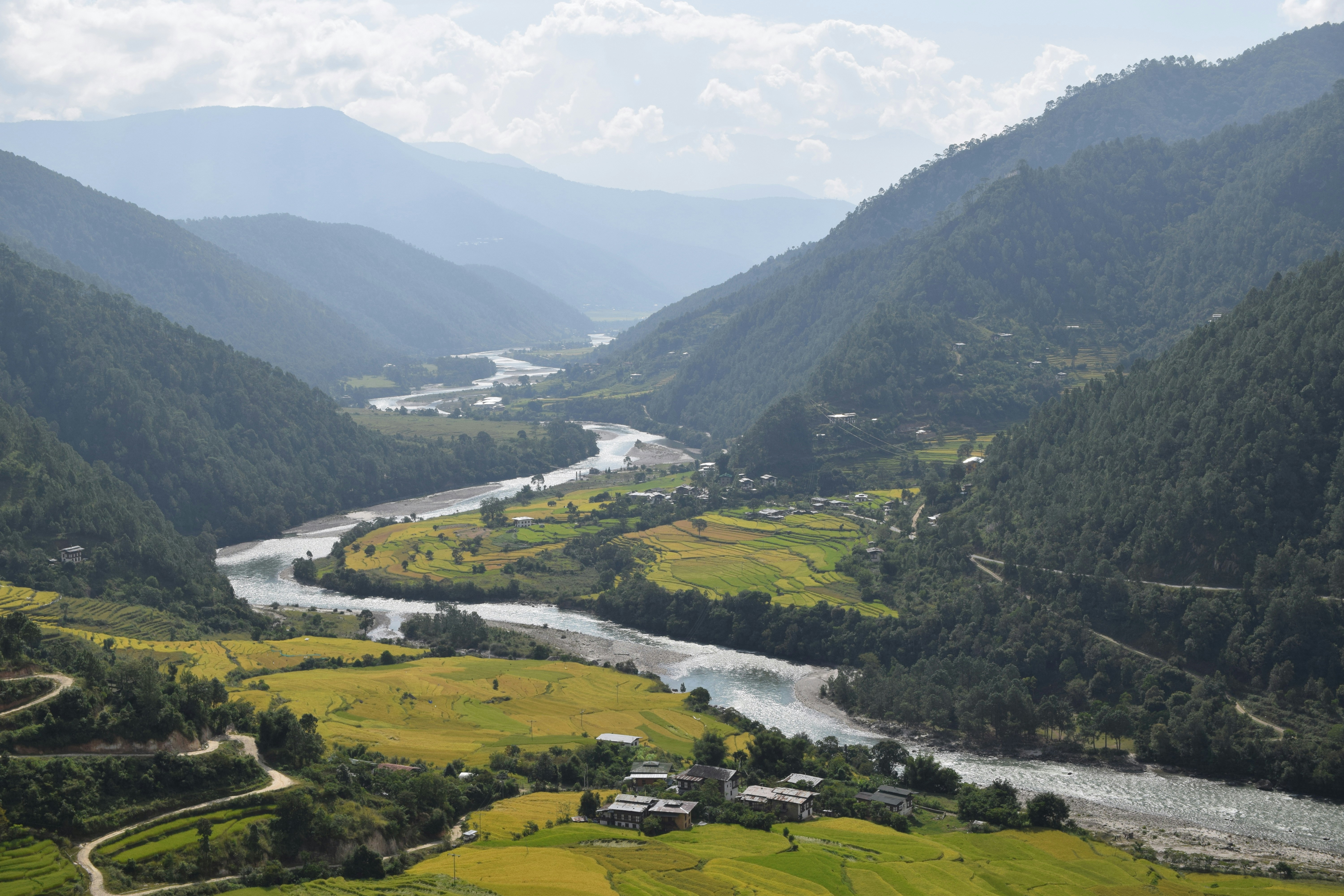
October is when Bhutan's skies are clearest, making it ideal for mountain views and photography. The monsoon rains have ended, the air is crisp, and the Himalayan peaks — including Jhomolhari and Gangkhar Puensum (the world's highest unclimbed mountain) — are visible from valleys throughout the country. The rice harvest is underway, turning the terraced fields golden, and there's a sense of abundance after the growing season.
October brings several major tshechus (festivals), including the Thimphu Tshechu — Bhutan's largest. The capital comes alive with thousands of Bhutanese traveling from across the country to witness the dances, receive blessings, and socialize. The festival is deeply religious but also genuinely joyful, with families picnicking and children running between the performances.
October is also prime trekking season. The Druk Path Trek (Paro to Thimphu), the Jomolhari Trek, and other routes through the Himalayas are at their most accessible. The trails are dry, the weather is stable, and the mountain views are as good as they get. Autumn temperatures mean cool mornings and evenings, but comfortable trekking conditions during the day.
Where We'd Stay: Amankora

For Bhutan, the Amankora lodges offer the country's most sophisticated accommodation. The collection consists of five lodges spread across Bhutan's western valleys — Paro, Thimphu, Punakha, Gangtey, and Bumthang — each designed to complement its setting with traditional Bhutanese architecture and contemporary luxury. The lodges serve as bases for exploring each region, with guides who understand the culture and religion at a level that transforms temple visits from sightseeing into genuine understanding.
What makes Amankora exceptional is the seamless experience. The lodges connect culturally and logistically, allowing you to move through Bhutan with consistency in service and quality while experiencing the diversity of the kingdom. April and October are when the lodges' locations truly shine — the valley views are spectacular, the outdoor spaces are comfortable, and the wood-burning stoves create the right atmosphere for evenings after long days of exploration. Through our Virtuoso partnership, you'll receive daily breakfast, a resort credit, and room upgrades when available.
Why These Months Work
April and October are Bhutan's shoulder seasons temperature-wise but peak seasons experience-wise. They bracket the monsoon months (June-August) when trekking becomes muddy and mountain views are obscured by clouds, and avoid the winter (December-February) when high-altitude passes can be snowed in and temperatures drop significantly.
Both months offer festival experiences, trekking opportunities, and weather that cooperates. April brings spring's optimism and bloom, while October offers autumn's clarity and harvest. Either month gives you Bhutan when it's most willing to reveal itself — and in a country that values preservation over tourism, that willingness matters.
Ready to discover Bhutan's magic? Enquire with The Camel Collection and let us design your Bhutanese journey — from monastery festivals to Himalayan treks to cultural immersion — complete with exclusive Virtuoso benefits.

.webp)


.svg)
.svg)
© 2025 Camel Collection
Hughenden, Rock Road, Rock, Cornwall, United Kingdom, PL27 6PW